



8+ years of global experience leading qualitative and quantitative research across cryptocurrency, banking, insurance, and AI-powered fitness products.

A Senior UX Researcher with over 8 years of global experience leading qualitative and quantitative research projects across cryptocurrency, banking, insurance, and AI-powered fitness products.
I'm a lifelong learner with deep passion in the craft of research, a background in Finance and a Master's in Behavioural Science at LSE. My approach to research is about weaving together conversations, behavioural data, and prior learnings into nuanced insights that give teams clarity and direction, empowering them to act with confidence and drive meaningful impact.
Empathetic and collaborative by nature, analytical and systematic by training — I build trust with teams, turn complex human behaviours into actionable strategies, and bridge gaps between user needs and company goals.
I have the right to work in Australia, Canada, the UK, and Hong Kong.
As a Senior UX Researcher with behavioural science, project management and finance background, I'm skilled across six key areas.
From finance and audit to behavioural science and UX research — my unconventional path informs how I approach research with rigour, curiosity, and commercial awareness.
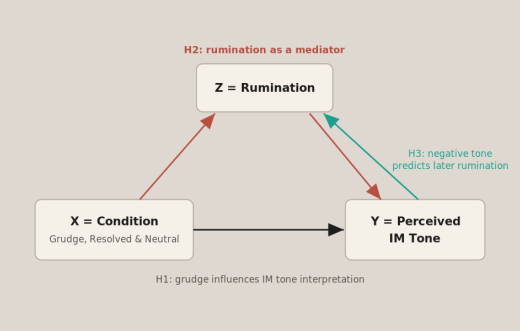
Deepened foundation in human behaviour, decision science, and experiment design and analysis. Dissertation: how workplace grudges shape the interpretation of coworker messages.
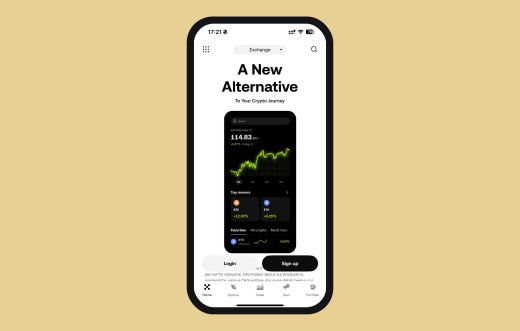
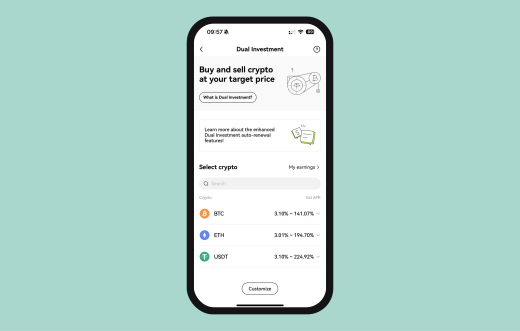
Promoted to Senior UX Researcher II in recognition of business impact and leadership. Led 25+ end-to-end qualitative and quantitative studies over 2.5 years as a strategic partner to product, design, business, and marketing teams. Established OKX's first scalable product experience benchmarking survey, lifted onboarding conversion by 22%, and improved discovery and conversion across investment products. Scaled and standardised research operations company-wide through training sessions, workshops, and the mentorship of a junior researcher from the ground up.
Led UX research for enterprise SaaS platforms and customer-facing apps across 3 Southeast Asian markets. Uncovered workflow friction and unmet needs through interviews, usability testing, and focus groups — with 90%+ of recommendations endorsed by stakeholders. Built research panels across 5 markets, cut reporting time by 50% through scalable workflows and templates, and supported a company-wide UX Research Community.
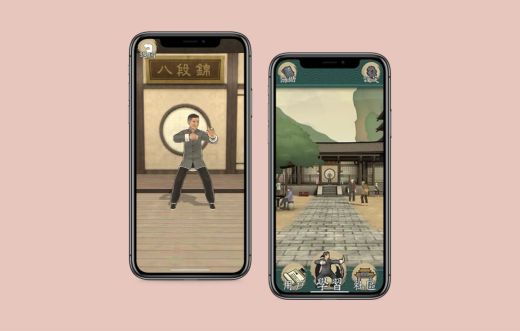
Led end-to-end UX research and design for 4 AI-powered health and fitness products. Delivered the award-winning Smart Baduanjin app — recognised by Google Play Hong Kong — and drove a 3× increase in smart fitness mirror sales through field research and rapid product iteration.
Built a UX research framework from scratch for the revamp of Hang Seng Bank's business e-banking platform. Embedded sprint-aligned research across core financial workflows, establishing UX research as a sustained practice where none had existed before.
Held roles at KPMG China, Fresenius Kabi, and Verizon Enterprise Solutions across audit, M&A, and financial planning. Rated top performer at KPMG for 3 consecutive years. Qualified Hong Kong CPA.
Gene consistently stood out as a top performer, delivering research that was both impactful and of exceptional quality.

Gene is a great UX researcher and designer who thinks deeply about the problem and delivers an insightful solution. She's also a team player that people enjoy working with. I would highly recommend Gene for any company.
Gene is an incredible mentor who has been pivotal in shaping me into the researcher I am today. Her patience, meticulous attention to detail, and unwavering support have been invaluable.

These case studies demonstrate my key skills in user research — from mixed-methods activation research to establishing global UX benchmarks and designing for underserved users.
Led a 4-month mixed-methods initiative to optimise the global activation journey from sign-up to first trade — uncovering 20+ friction points across 4 markets.
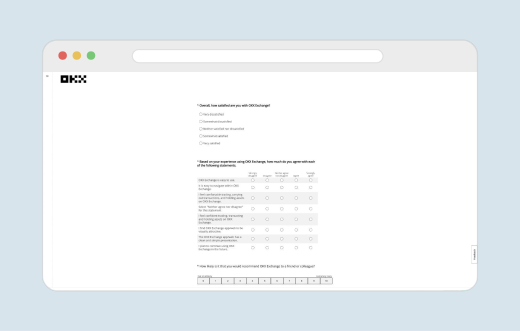
Designed and launched OKX's first UX benchmark survey across 6 markets and 7 languages, gathering ~6,000 valid responses to guide product strategy.
Led research and design of Smart Baduanjin — an award-winning AI-powered app teaching traditional Qigong to elderly users. Google Play HK Best App 2019.
I led this research initiative to optimise the new user activation journey — providing holistic analysis of the end-to-end journey from signup to deposit, identifying friction points and improving engagement for new users globally.
OKX invested millions in global growth, driving huge sign-ups — but activation from ID verification to deposit and trade consistently underperformed.
Different teams handled each activation step, so insights stayed siloed and rarely crossed team lines.
A diary study revealed ID verification and deposit methods were not well localised for key markets.
Third-party plugins used in verification and deposit steps couldn't be tested using standard prototypes.
I led this project independently, coordinating with product teams, local team members, and researchers across multiple markets to cover the full activation journey.
Research planning & usability testing on released app. Planned and led 21 remote usability tests with new users from 4 key non-English markets, supported by 2 researchers and 4 local team members.
Usability testing results & rapid follow-up. Identified 20+ usability issues across sign-up, ID verification, and deposit steps. Collaborated with product teams to implement fixes tracked via Jira.
Competitor analysis & journey mapping. Analysed 3 leading crypto and stock exchange apps to identify design best practices, and mapped all research into a single global activation journey.
Usability testing of redesigned ID verification flow. Conducted 5 remote tests that validated critical issues were resolved and UX improvements landed successfully.
To determine research methodology, focus markets, and shape the test script, I designed a research plan using analytics, customer support logs, and a prior diary study.
Used Amplitude to find conversion rates across key markets and selected those with the steepest drop-offs. Reviewed support logs to surface activation issues and tailor test scenarios. A prior diary study revealed ID verification flaws — this led to opting for live-app testing to expose prototype-hidden issues and move faster.
Scoped resources needed to complete live-app testing within 3 weeks. Engaged 2 researchers to support participant screening and testing, and 4 local team members for translation, recruitment, and facilitation. Ran training sessions to equip local staff to moderate usability tests.
"You've done your research and decided to create a crypto account with OKX. Please show me how you would accomplish that using your phone."
"You want to put funds into your OKX account to test out its trading features. Please show me how you would fund your account."
Finding participants in 4 target markets for live-app testing was challenging — language barriers, no platform coverage, and ID requirements — but creative recruitment and strong local team support made it happen.
Found participants via referrals and freelancer platforms such as Upwork and Respondent.
Leveraged trusted relationships built earlier for recruitment, translation, and facilitation — enabling 21 sessions and 20+ uncovered issues under a tight timeline.
Usability testing on the released app revealed critical friction points — especially at ID verification and funding.
⚠️ Due to confidentiality, some details of the findings have been omitted.
Certain sign-up methods didn't work as expected, creating friction and delays that prevented users from progressing to the next step.
"I feel lost. I tried to find Deposit in main menu but couldn't."— Participant 1
Verification steps created uncertainty, with unclear and misleading guidance on next actions after submission.
"It's confusing how long I actually need to wait to [get verified]."— Participant 16
Funding flows were complex and unintuitive, with key functions missing from the main menu and third-party payment methods falling short in UX.
I delivered recommendations that ranged from quick wins requiring minimal resources to ambitious long-term redesigns. By rapidly sharing insights, tracking in Jira, and collaborating closely across teams, we achieved a 22% uplift in ID verification conversion — unlocking deposits and trades.
Simplification of homepage CTA · Clearer messaging and CTAs by verification status · Improved funding flow navigation
I extended the research with competitor analysis to get buy-in for enhancements that go beyond usability to delight — examining how leading exchanges like Coinbase and Binance reduce anxiety and ambiguity in key funding steps.
Activation journey mapping consolidated inputs from usability testing, competitor analysis, and prior research — fostering cross-team alignment and enabling me to define three principles that drive new user activation.
⚠️ Due to confidentiality, details of the journey map cannot be shown.
Surface the right products and features at the right moment to reduce overwhelm.
Build confidence at high-anxiety moments — especially ID verification and first deposits.
Recognise that crypto is novel and intimidating — build trust, engagement, and long-term loyalty.
Improved ID verification conversion — unlocking deposits and trades worldwide and overcame multi-market research challenges, creating a smoother onboarding journey worldwide.
By month 4, follow-up testing confirmed enhancements improved usability and resolved critical issues in sign-up and ID verification.
I designed and launched a quantitative and qualitative survey to establish quarterly UX metrics that track and guide usability improvements, and to gather insights that informed the product roadmap.
Rich qualitative insights existed, but no consistent, quantitative way to measure UX. Leadership couldn't validate if changes improved UX or compare across markets.
Small-sample findings were sometimes dismissed. Quantitative benchmarks were needed to make insights more persuasive and actionable.
Different teams sent surveys independently with varying quality, compromising feedback, risking survey fatigue, and undermining brand credibility.
I designed a survey combining SUPR-Q and CSAT for quantitative UX metrics with qualitative questions to identify the "why" behind scores.
SUPR-Q selected as the core UX metric for comprehensive coverage of usability, trust, loyalty, and credibility.
Evaluated localisation investments across multiple markets with open-ended and MC questions.
Frequency, device usage, primary exchange, and switching intent — to understand behavioural segments.
Multi-channel distribution plan: email, KOLs & followers, and in-app surveys to reach different user segments and reduce method-specific biases.
With support from 6 different teams — marketing, customer support, localisation, content design, legal, and engineering — I successfully distributed across 7 languages.
Orchestrated cross-team support from marketing, localisation, content design, and legal for review and distribution.
Set up survey in 7 languages across SurveyMonkey and Pollfish, optimised for reduced fatigue and better response quality.
Piloted with 100 users per market to validate translations and flow before full launch.
Rolled out in controlled batches, pausing once target responses per market were reached.
⚠️ Due to confidentiality, UX metrics and some qualitative details have been omitted. Chart below is illustrative only.
Strong UX metrics across all markets. NPS rose 27% in one market, validating UX and localisation improvements. Small wins and unmet needs surfaced to build on.
Usability challenges for new users. Technical issues like slow loading. Futures & margin trading interfaces less intuitive than competitors. P2P transaction reliability concerns.
For illustrative purposes only — not actual survey data.
Prepared both consolidated and market-specific reports. Organised readouts for all teams, followed by smaller sessions with product owners and designers to drive action.
"The survey results really helped my team in project prioritisation and also validated some usability issues we previously identified as well!"— Localisation Product Lead
Tracked all findings in Jira and followed up regularly to ensure progress on identified issues.
Provided both ideal long-term fixes and feasible quick wins to keep momentum while larger changes were in development.
OKX's first UX benchmark ever — validating improvements and steering future product and research decisions.
I led the research and design of Smart Baduanjin — an AI-powered fitness app that helps older adults in Hong Kong learn and practise the traditional eight-movement Chinese Qigong exercise on mobile and tablet.
Baduanjin is an eight-movement Chinese mind-body exercise — short, easy to learn, and proven to enhance physical flexibility and coordination.
With Hong Kong facing a rapidly ageing population and high smartphone usage among the elderly, the government funded OliveX to explore technologies that promote active-ageing.
Many older adults left the workforce before technology integration, leaving them with limited digital knowledge.
Limited digital exposure leads to feelings of incompetence and hesitation with new apps.
Learning BDJ is challenging enough — adding AI pose detection to a mobile app amplifies complexity significantly.
Interviewed BDJ practitioners and non-practitioners to probe motives, struggles, and habits. Informed journey maps and feature ideas.
Sample: "When you first started learning BDJ, what did you find challenging?"
Observed BDJ classes to understand how older adults learn and how instructors structure lessons — directly guiding the learning flow design.
Explored different schools, benefits, and the history of BDJ, plus how elderly users interact with smart devices, to shape app content and interactions.
AI practice required full-body capture, but elderly users struggled to understand the placement requirement.
Multiple new tasks at once — camera permission, phone setup, and BDJ movements — overwhelmed users simultaneously.
Without a coach, users couldn't tell if they were improving — creating uncertainty and reduced motivation.
Many elderly users were hesitant and often sought reassurance from others before proceeding.
Added video tutorials, volume prompts, and clear text with vocal cues to guide users through phone setup for the body scan — a completely unfamiliar requirement.
Explored different phone/tablet placement scenarios and added tailored vocal cues for each to increase usability.
Reduced cognitive load by breaking learning into smaller, sequenced steps:
Inspired by weightlifters who film their form, I designed a recording feature letting users compare their movements side-by-side with the in-app instructor.
"Without a coach present, I wouldn't know what I did right or wrong."
This became the feature users loved most — providing a sense of improvement and progress independent of the AI's limited feedback capability.
Google Play HK Best Personal Growth App of 2019. Now part of rehabilitation programmes in local hospitals.
"Smart BDJ has changed the way I teach patients Baduanjin. I see countless benefits for rehabilitation."
— Edward Chan, Occupational Therapist
I'm open to new opportunities, collaborations, and conversations. Feel free to reach out.